Your session just ended. Your legs feel heavy, your heart rate is slowly coming down, and only one thing is on your mind: the shower, the couch, or the meal waiting for you. The recovery phase? It almost always gets skipped.
That is a shame, because the minutes right after a workout are a golden window. Your body is warm, your tissues are well supplied with blood, and your nervous system is still in action mode. It is exactly the right moment to help it switch into repair mode.
Good news: you do not need to dedicate half an hour to it. An 8 to 10 minute mobility routine is enough to get circulation going, release the areas that just worked hard, and soften tomorrow's soreness.
Why mobility helps your body recover
During exercise, your muscles contract hundreds of times. The result: residual tension builds up, and some areas stay "under pressure" long after the session ends.
Mobility work pulls three levers at once.
Circulation. Slow, full-range movements act like a gentle pump: blood flows better, metabolic waste gets cleared faster, and nutrients reach the places your body needs them for repair.
Your nervous system. After a session, you are still in effort mode. Calm movement paired with deep breathing sends a clear signal: the demand is over, it is safe to let go.
Joint range of motion. Moving through full ranges while your body is warm helps you keep your mobility instead of letting your tissues settle into stiffness.
By the way, mobility work and passive stretching are not quite the same thing. If you are curious about the nuance, we break it down in our article on the difference between stretching and mobility.
Soreness: what is actually happening
Soreness is not "lactic acid crystals," despite the stubborn myth. It comes from tiny micro-tears in your muscle fibers, along with a small, natural inflammatory response. It usually peaks 24 to 48 hours after exercise.
It is a sign of adaptation, not injury: your body is rebuilding itself slightly stronger than before. Complete rest, however, tends to prolong the unpleasant feeling. Gentle movement and circulation remain your best allies — and that is exactly what this routine gives you.
One important point: a sore muscle does not need aggressive stretching. Look for ease, never intensity.
Your 8 to 10 minute post-workout routine
Ideally done within 10 to 15 minutes of finishing your session, while your body is still warm.
1 — Slow walking and breathing (1 min)
Walk around calmly, letting your arms swing. Inhale through your nose for 4 counts, exhale through your mouth for 6. This is your transition from effort to calm.
2 — Standing forward fold (1 min 30)
Feet hip-width apart, knees soft, let your upper body fold forward. Arms hang, head is heavy. Do not try to touch the floor — just let gravity stretch your entire posterior chain: calves, hamstrings, back. Roll back up slowly, one vertebra at a time.
3 — Alternating low lunge (2 min)
One foot forward, back knee on the ground, hips sinking gently forward. You should feel the front of your hip opening up. Hold for 45 seconds on each side, breathing deeply.
4 — Cat-cow (1 min 30)
On all fours, alternate between arching your back on the inhale and rounding it on the exhale. Six to eight slow reps to bring fluidity back to your whole spine.
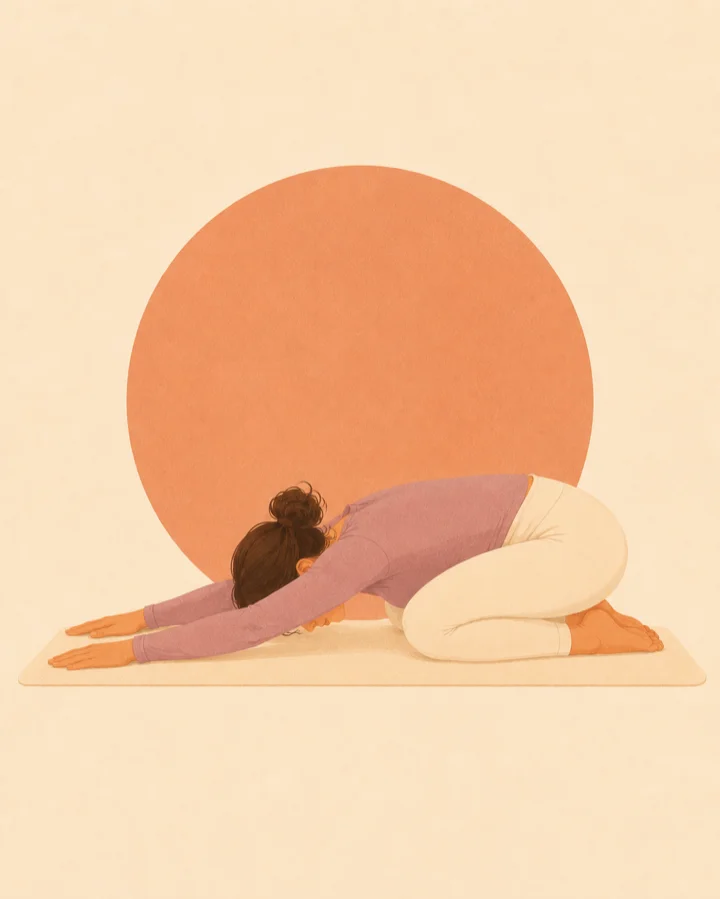
5 — Child's pose (2 min)
Sit back on your heels, arms extended in front of you, forehead toward the floor. Let your back widen with each inhale and your body sink a little deeper with each exhale.
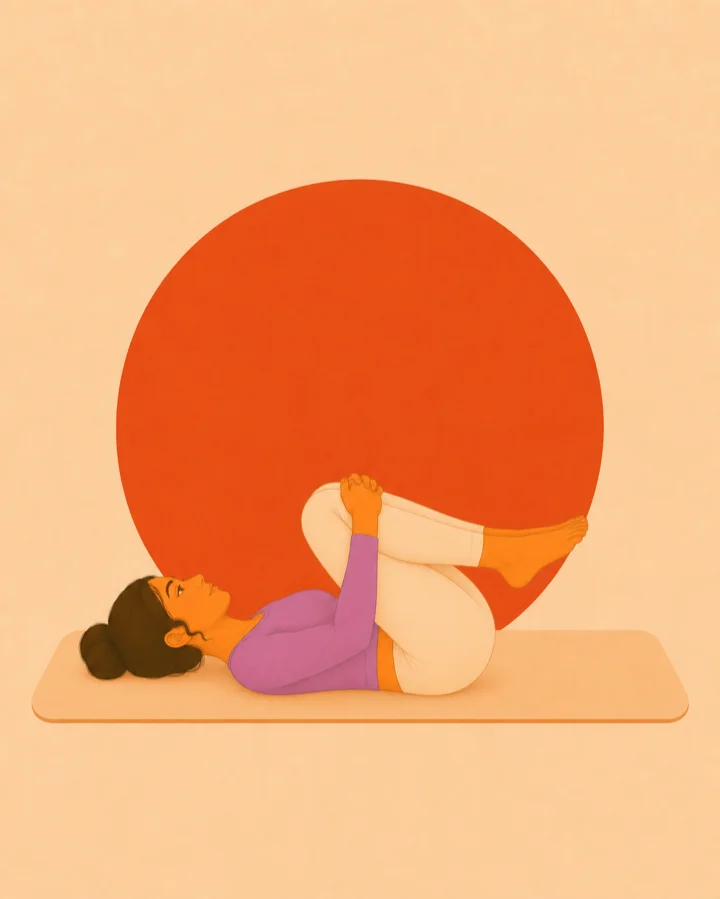
6 — Legs up the wall (2 min)
Lie on your back with your legs resting vertically against a wall. Close your eyes and breathe calmly. This position supports venous return and gives your legs a real break after the effort.
The mistakes that sabotage your recovery
Forcing stretches on exhausted muscles
After a session, your muscles are vulnerable. Intense, prolonged stretching can aggravate the micro-tears instead of soothing them. Stay fully within your comfort zone.
Skipping the routine on your most tired days
The harder the session, the more these 10 minutes matter. If you are truly wiped out, keep at least exercises 5 and 6: three minutes is always better than nothing.
Ignoring the rest
Mobility does a lot, but it does not replace water, a proper meal, or a real night's sleep. Think of it as the first building block of your recovery, not the only one.
In a nutshell
Recovery is not what happens when you do nothing — it is a skill you can practice. Eight to ten minutes of gentle mobility after each session is enough to boost circulation, calm your nervous system, and soften soreness.
With Pliable, you can measure your mobility score in 3 minutes across 8 areas of your body, then follow routines of under 10 minutes designed to support your recovery. Enough to turn your post-workout wind-down into a reflex, without having to think about it.
Frequently Asked Questions
Should you do your mobility routine right after your workout?
Ideally yes, within 10 to 15 minutes of finishing your session. Your body is still warm, circulation is active, and slow movement helps your nervous system wind down gently. If that is not possible, doing the routine later the same evening is still very beneficial.
Can mobility work make soreness disappear?
Not entirely, and that is normal: soreness is part of how your muscles adapt and get stronger. However, a gentle mobility routine boosts blood flow, which can reduce both the intensity and the duration of soreness. Light movement remains one of the best remedies.
Should you stretch intensely after training?
No. Right after exercise, your muscles are tired and carry tiny micro-tears. Very intense stretching can make those tensions worse. Stick to slow, comfortable movements through a full range of motion, without ever forcing.
Does this routine work for every sport?
Yes. Whether you just finished a run, a strength session, a bike ride, or a group class, these movements target the big areas most activities rely on: hips, back, and legs. Simply spend a little more time on the zone you worked hardest.