Some people go through their period barely thinking about it. For others, the first days of the cycle mean cramps, an aching back, and energy scraping the floor. If you're in the second group, let's start with what matters most: your pain is real, and you have nothing to prove to anyone.
This article won't promise you a miracle. Stretching doesn't replace a hot water bottle, a treatment, or medical advice. But for many people, a few very gentle movements bring genuine relief — and that's already a lot.
The idea isn't to "exercise through the pain." It's to offer your body a few minutes of slow movement, in a comfortable setting, only if you feel like it.
What the research says, without overselling it
Several studies suggest that gentle, regular physical activity — stretching, yoga, walking — can reduce the intensity of menstrual cramps for some people. The mechanisms usually mentioned: better circulation around the pelvis, the release of endorphins (the body's natural painkillers), and the relaxing of muscles that clench in response to pain.
Two honest caveats: these effects vary a lot from one person to the next, and research is still exploring the topic. Think of stretching as one comfort tool among others, not as a treatment.
The golden rule: you decide
There are days when moving feels good, and days when the only right answer is a hot water bottle, a blanket, and a show. Both are perfectly valid. Rest is not a failure, and this routine is not homework. It's here if you want it, and it will wait for you if you don't.
The gentle routine (about 10 minutes)
Settle onto a mat on the floor, with one or two cushions within reach. The hot water bottle can stay close by. Hold each pose while breathing slowly, low into your belly.
1 — Child's pose (2 to 3 min)
Kneeling, spread your knees wider than your hips, big toes touching, and let your torso sink between your thighs. Rest your forehead on the floor or on a cushion, arms stretched forward or relaxed alongside your body. This pose releases the lower back and creates a deeply soothing, cocoon-like feeling. Stay as long as you like.
2 — Slow-motion cat-cow (2 min)
On all fours, round and then gently arch your back, following the rhythm of your breath. The movement of the pelvis softly massages the lumbar and abdominal area. An even gentler version: slow circles of the pelvis, still on all fours, one way and then the other.
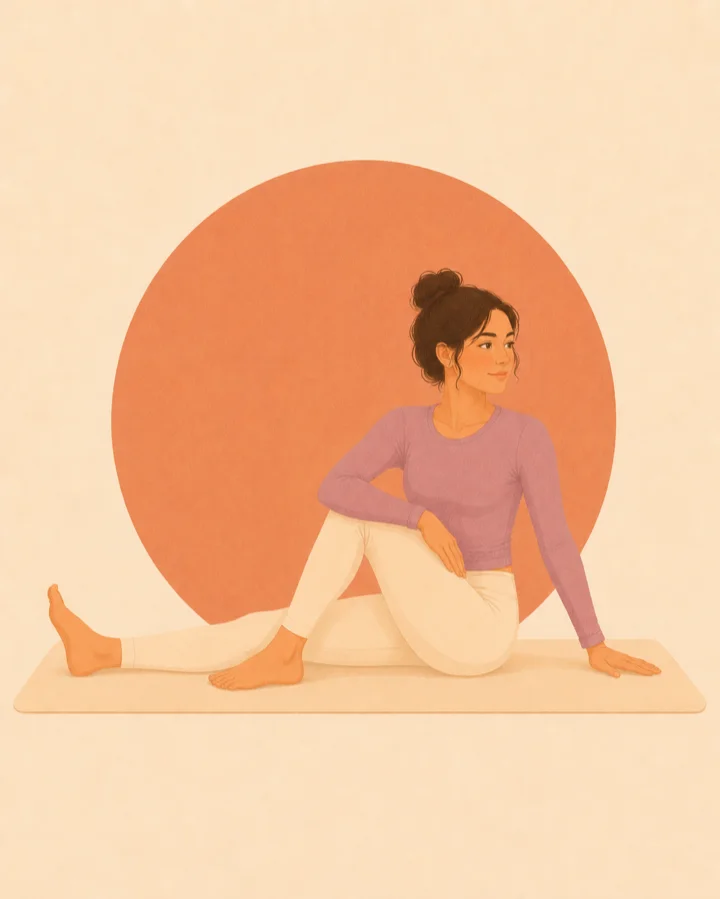
3 — Reclined twist (2 min)
On your back, knees bent, let them fall to one side while your head turns the other way. Slide a cushion under your knees to make the position completely passive. One minute per side, forcing nothing.
4 — Reclined butterfly (2 to 3 min)
On your back, soles of the feet together, knees opening toward the floor — with cushions under the knees if the opening pulls too much. One hand on your belly, slow breathing. Many people find this pose especially comforting during their period.
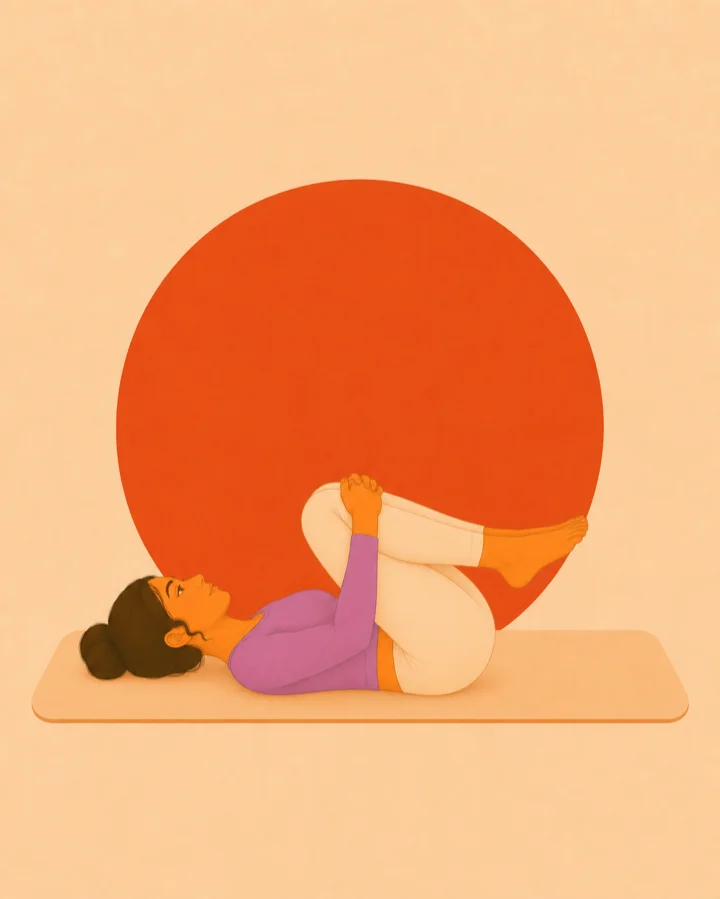
5 — Knees to chest (1 min)
Gently draw your knees toward you, wrap your arms around them, and rock from side to side. Finish lying flat, arms alongside your body, for a few deep breaths.
Adapting, shortening, skipping: everything is allowed
If a pose increases the pain, come out of it. If three minutes is enough today, that's perfect. Your body doesn't work the same way at every point in the cycle, and your routine can follow those variations rather than ignore them. On better days, if you'd like to explore pelvic mobility more deeply, our beginner's guide to hip mobility is a good place to start.
When to talk to a professional
Periods that pin you to your bed every month, pain that shrugs off standard painkillers or gets worse over time: that is not "just normal," and you deserve to be heard. Conditions like endometriosis flew under the radar for far too long. A doctor can help you get clarity — stretching comes afterward, as a complement, never as a substitute.
On the days you feel like a little guided gentleness, Pliable offers routines of less than 10 minutes matched to how you feel right now — and its 3-minute mobility score lets you stay in tune with your body, cycle after cycle, with zero pressure.
Frequently Asked Questions
Can stretching really ease period cramps?
For some people, yes: studies suggest that gentle, regular movement can reduce the intensity of cramps, likely through improved circulation and endorphins. The effects vary a lot from person to person: think of stretching as a comfort tool, not a treatment.
Should I avoid moving during my period?
No, there is no reason to avoid movement if you feel like it. Many people feel better after gentle activity. The only rule: match the intensity to your energy of the moment, and never force yourself.
Are there positions to avoid during your period?
Research has not established any firm restrictions. Some traditions advise against inverted poses, but without clear scientific evidence. Your best guide remains how you feel: if a position increases your discomfort, simply come out of it.
When should I see a doctor about painful periods?
If your pain keeps you from living normally every month, resists the usual pain relief, or gets worse over time, talk to a doctor. Conditions like endometriosis went underdiagnosed for a long time: your pain deserves to be taken seriously.